
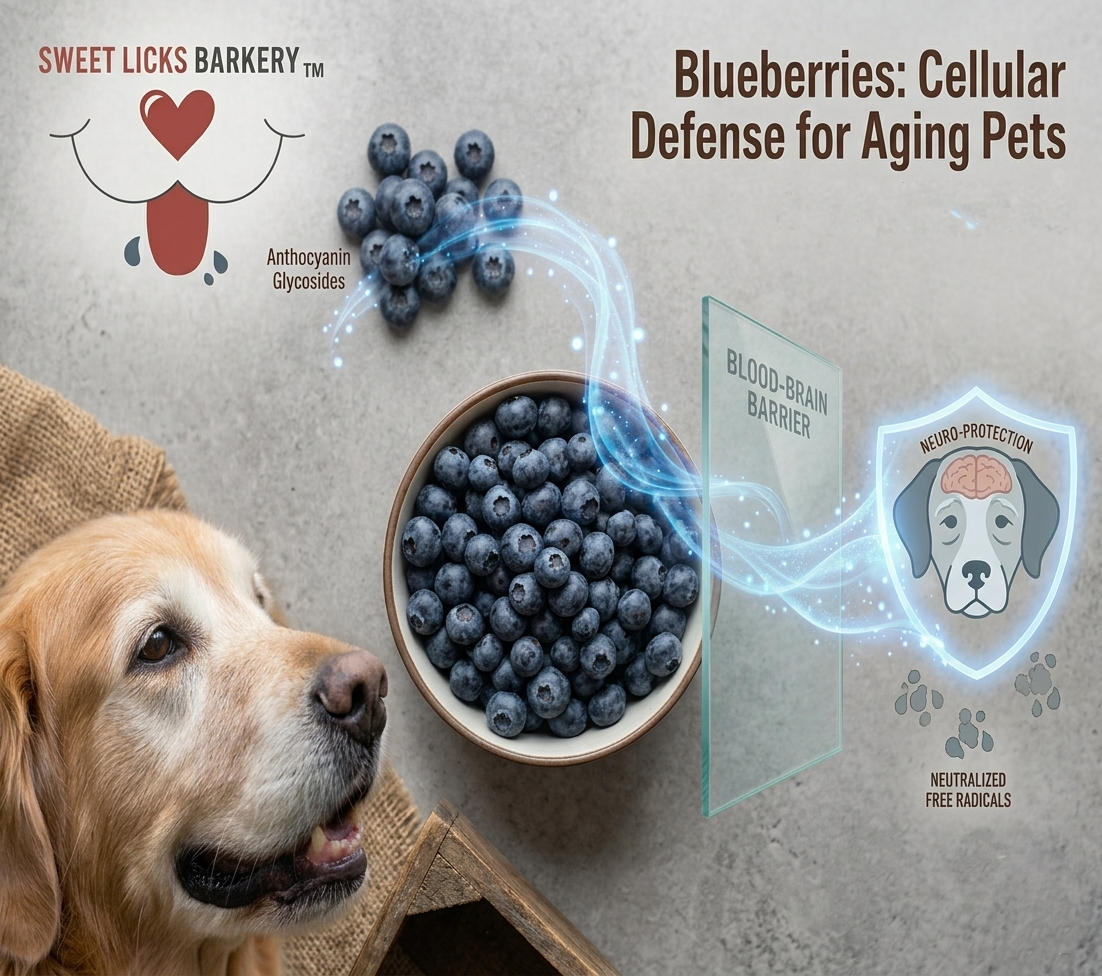
Anthocyanin Glycosides: Neutralizing Free Radicals at a Cellular Level
Anthocyanin Glycosides: Neutralizing Free Radicals at a Cellular Level
As companion animals age, their internal cells face a continuous biochemical challenge known as oxidative stress. During normal daily metabolism, your pet's cells produce unstable, highly reactive oxygen molecules called free radicals (Case et al., 2011). If left unchecked by natural dietary defenses, these free radicals steal electrons from healthy tissues, causing structural damage to cellular lipid membranes, accelerating cellular aging, and contributing to canine cognitive decline (Papandreou et al., 2009).
To shield aging minds and bodies from this slow cellular oxidation, we must look to the powerful protective compounds found inside organic blueberries.
The Power of Anthocyanin Glycosides
The deep blue pigment of the blueberry is created by high concentrations of natural antioxidants called anthocyanins(Willis et al., 2009). These complex polyphenol molecules function as highly efficient electron donors.
When anthocyanins encounter an unstable free radical, they safely donate an electron to neutralize the molecule, stopping the chain reaction of oxidative damage before it can harm healthy cell structures (Willis et al., 2009). This cellular protection is vital for supporting long-term vascular health, protecting delicate capillaries, and supporting natural cell-mediated immunity in senior pets (Papandreou et al., 2009).
Crossing the Blood-Brain Barrier
The most remarkable property of blueberry anthocyanins is their unique ability to cross the highly restrictive endothelial wall known as the blood-brain barrier (Willis et al., 2009). While many traditional synthetic antioxidants are blocked by this barrier, dietary anthocyanins attach to specialized glucose transporters on the capillary walls, moving smoothly into central nervous tissues (Willis et al., 2009).
Once inside the brain, these pigments accumulate within the hippocampus and cerebral cortex—the core regions responsible for memory, spatial learning, and baseline cognitive function (Willis et al., 2009). By neutralizing localized free radicals, blueberries help protect aging senior pets from cognitive decline, supporting mental clarity and baseline sharpness (Papandreou et al., 2009). Integrating fresh organic blueberries into our farm to bowl recipes delivers a vibrant dose of natural cellular defense that protects your companion's system from the inside out.
References
Case, L. P., Daristotle, L., Hayek, M. G., & Raasch, M. F. (2011). Canine and Feline Nutrition: A Resource for Companion Animal Professionals (3rd ed.). Mosby Elsevier.
Papandreou, M. A., Dimakopoulou, A., Linardaki, Z. I., Cordopatis, P., Klimis-Zacas, D., Margarity, M., & Lamari, F. N. (2009). Effect of a polyphenol-rich wild blueberry extract on cognitive performance of mice, brain antioxidant markers and acetylcholinesterase activity. Behavioural Brain Research, 198(2), 352-358. https://doi.org/10.1016/j.bbr.2008.11.013
Willis, L. M., Shukitt-Hale, B., & Joseph, J. A. (2009). Recent advances in phytomedicine research on the brain: Blueberries and cellular defense. Phytomedicine, 16(6-7), 409-420. https://doi.org/10.1016/j.phymed.2009.02.013