
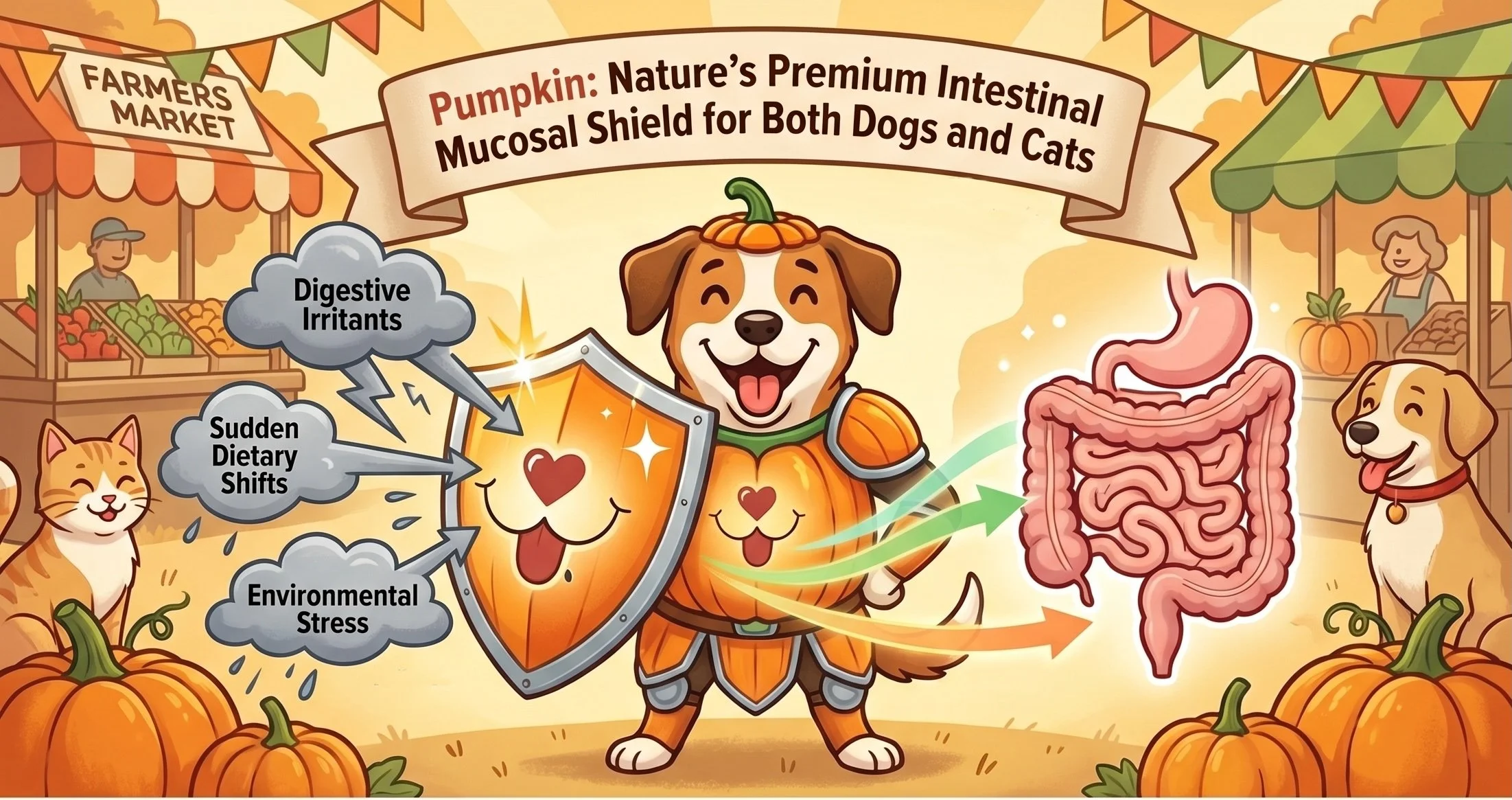
Pumpkin: Nature’s Premium Mucosal Shield for Dogs and Cats
Pectin and Soluble Fibers: The Intestinal Mucosal Shield
In the field of companion animal gastroenterology, maintaining intestinal homeostasis is essential for overall long-term wellness. The lining of your pet's small and large intestines is a highly sensitive environment covered in millions of single-layer absorptive cells called enterocytes (Case et al., 2011). When a pet experiences a sudden dietary shift or environmental stress, this delicate barrier can become irritated, resulting in rapid fluid shifts, mucosal irritation, and loose stools.
To support this vital system during digestive challenges, nature provides an exceptional whole-food stabilizer: organic pumpkin. Exploring the food chemistry of this vibrant superfood reveals why it functions as an invaluable intestinal shield for both dogs and cats.
The Science of Soluble Pectin Fibers
Pumpkin is packed with high concentrations of soluble dietary fibers, most notably a complex non-starch polysaccharide called pectin (Sunvold et al., 1995). Soluble fibers possess unique hydrophilic properties, meaning they act like a natural sponge inside the intestinal tract (Case et al., 2011).
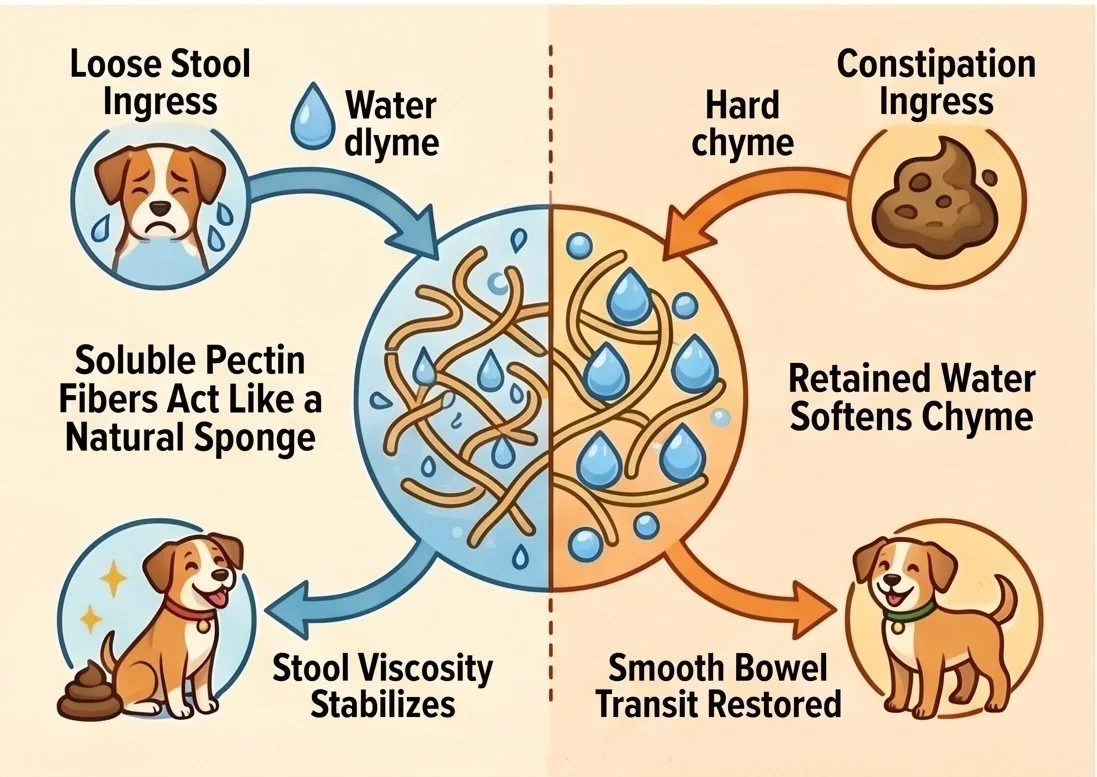
When a pet is managing diarrhea, these pectin strands absorb excess fluid within the bowel, increasing stool viscosity and safely returning transit speeds to normal (Case et al., 2011). Conversely, if a pet is suffering from constipation, the water retained by these fibers helps soften hardened food mass, lubricating the colonic pathway for smooth, comfortable elimination (Sunvold et al., 1995).
Fueling the Trophic Cascade
Beyond basic fluid regulation, pumpkin's soluble fibers provide critical long-term support for your pet's gut microbiome. As pectin moves into the large intestine, resident beneficial microbes ferment the material, breaking it down into volatile short-chain fatty acids (SCFAs)—specifically acetate, propionate, and butyrate (Sunvold et al., 1995).
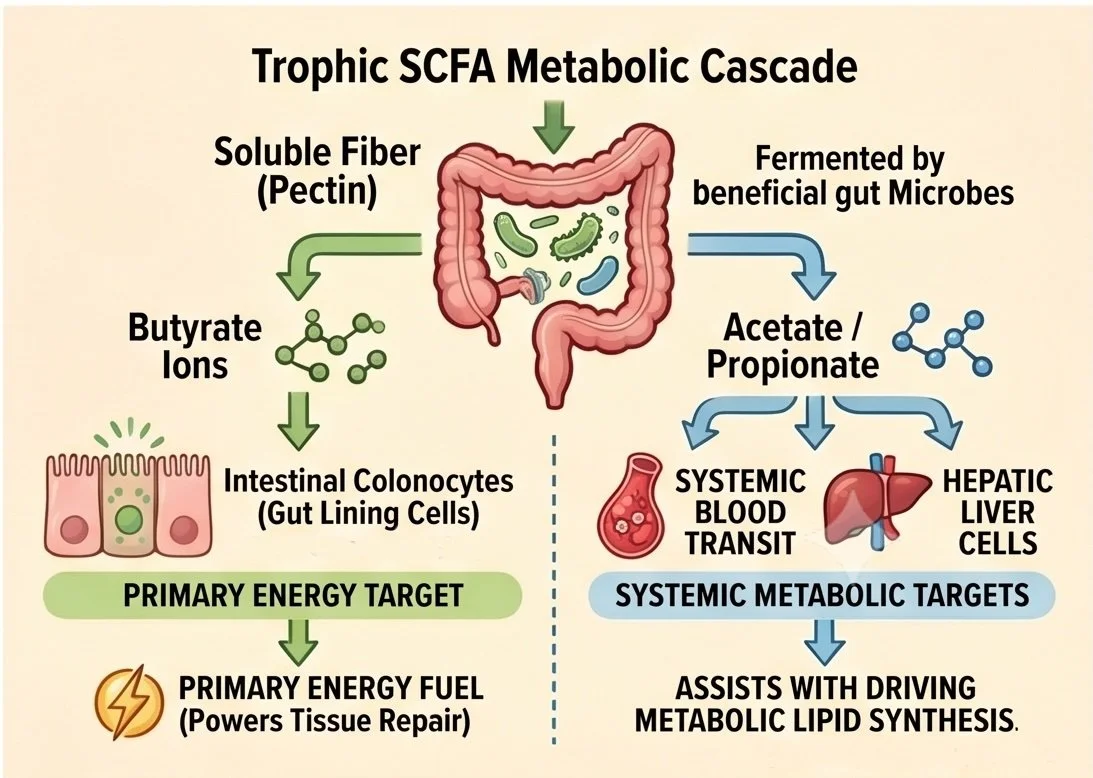
Tropic SCFA Metabolic Cascade
Butyrate acts as the primary energy fuel used by colonocytes to power cellular repair, epithelial division, and mucosal wall reconstruction (Case et al., 2011). This continuous fermentation process naturally lowers the pH of the colon, creating a protective, slightly acidic environment that discourages the overgrowth of harmful pathogens like E. coli or Clostridium (Sunvold et al., 1995). By adding pure organic pumpkin to our farm to bowl treats, we deliver a gentle layer of soluble fiber that shields the gut mucosa and supports stable, comfortable digestion naturally.
References
Case, L. P., Daristotle, L., Hayek, M. G., & Raasch, M. F. (2011). Canine and Feline Nutrition: A Resource for Companion Animal Professionals (3rd ed.). Mosby Elsevier.
Sunvold, G. D., Fahey, G. C., Merchen, N. R., & Reinhart, G. A. (1995). In vitro fermentation of selected fibrous substrates by dog and cat fecal inoculum. Journal of Animal Science, 73(4), 1091-1099. https://doi.org/10.2527/1995.7341091x