
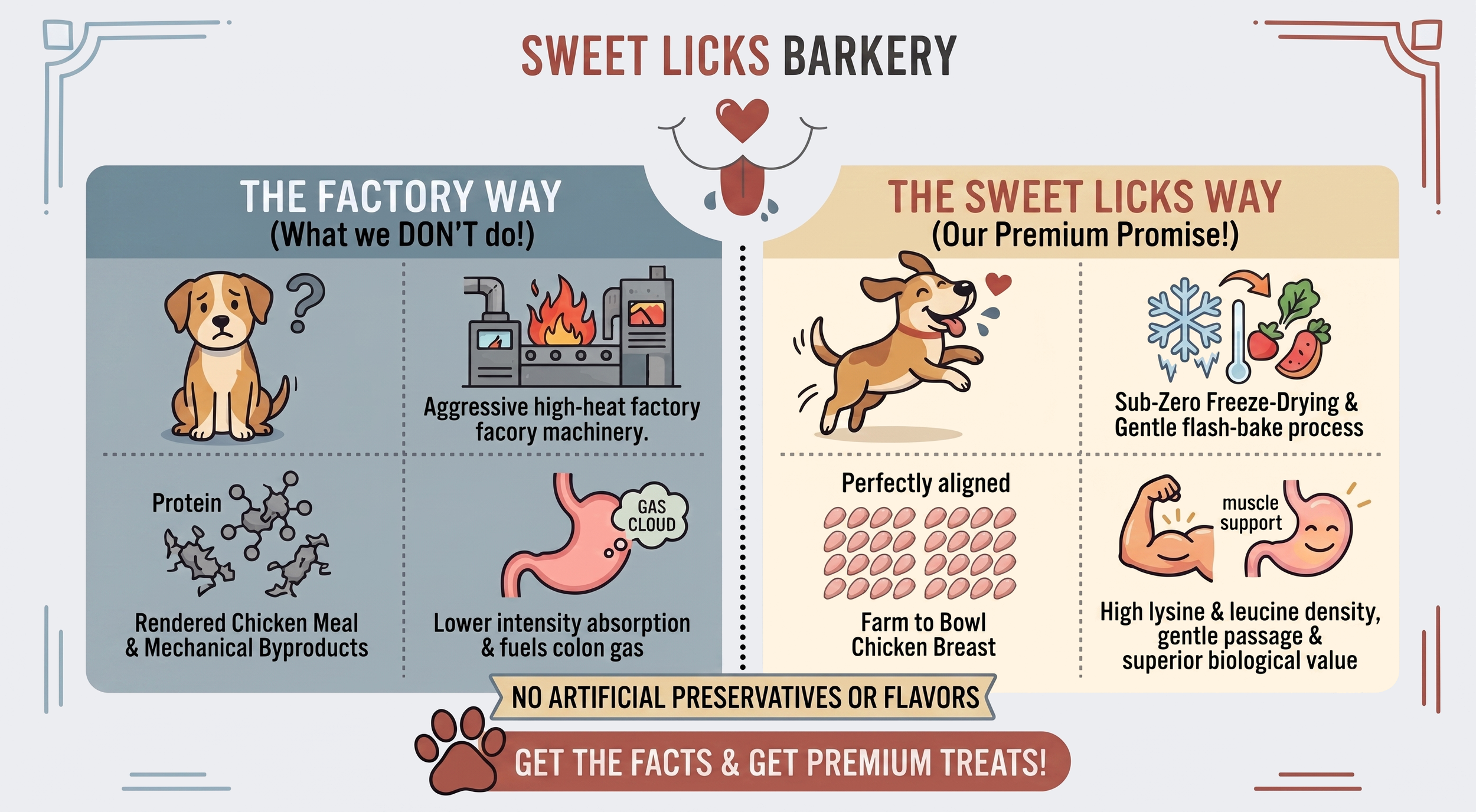
Sweet Licks Barkery Processes Retain Nutrients
Essential Amino Acid Spectra: The Biological Value of White Meat
When evaluating protein sources for a companion animal's diet, professional formulators look far beyond the simple "crude protein" percentage displayed on a guaranteed analysis label. In canine and feline physiology, dietary proteins are not absorbed as whole molecules; instead, they must be systematically broken down by gastric pepsin and pancreatic proteases into individual free amino acids and small peptide chains before crossing the intestinal enterocyte barrier (Case et al., 2011). The ultimate efficiency with which a animal's body splits, absorbs, and retains these protein fragments is defined as its bioavailability coefficient (Montegiove et al., 2022).
At Sweet Licks Barkery, we utilize lean, farm to bowl white meat chicken breast as a cornerstone of our single-protein formulations because it delivers a pristine essential amino acid spectrum with exceptional biological utility (Montegiove et al., 2022).
The Essential Amino Acid Spectrum
Both dogs and cats require ten essential amino acids that their bodies cannot synthesize internally: arginine, histidine, isoleucine, leucine, lysine, methionine, phenylalanine, threonine, tryptophan, and valine (National Research Council, 2006). If a reward relies on low-grade plant proteins or un-rendered structural byproducts (such as feather meals or collagen scraps), the amino acid profile is heavily distorted, often completely lacking sulfur-containing blocks like methionine (Case et al., 2011).
Lean farm to bowl chicken breast mirrors the evolutionary requirements of carnivores and omnivores with high efficiency:
High Lysine and Leucine Density: Supplies the precise structural sub-units necessary for skeletal muscle repair, enzyme production, and cellular protein synthesis (Montegiove et al., 2022).
Outstanding Nitrogen Retention: Achieves a superior biological value score, meaning the absorbed nitrogen is retained by tissues rather than being converted into cellular waste that strains the filtering systems (Case et al., 2011).
Gentle Intestinal Passage: As a highly digestible white meat, it minimizes the amount of unabsorbed protein reaching the colon, drastically reducing the risk of undesirable bacterial fermentation and subsequent gas production (Deng et al., 2016).
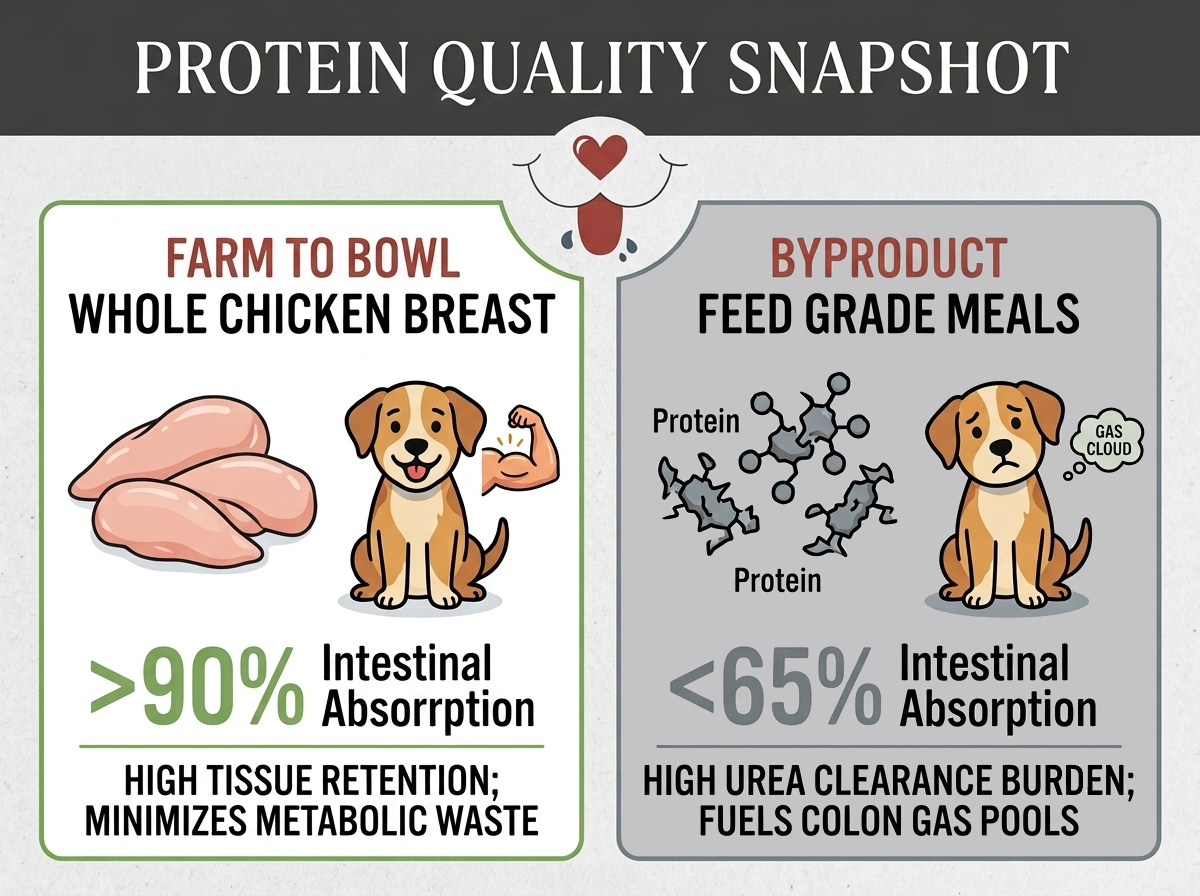
Protein Quality Snapshot
Eliminating High-Heat Damage
The vast majority of commercial chicken-flavored pet rewards utilize rendered chicken meals or mechanical byproducts that have undergone multiple aggressive heating loops inside large factories before being packed down into a biscuit shape (Case et al., 2011). This intense processing deforms the natural shape of the protein chains, creating cross-linked chemical bonds that directly resist your pet's pancreatic enzymes (Montegiove et al., 2022).
By sourcing clean farm to bowl chicken breast and preserving it via gentle, sub-zero vacuum freeze-drying, we keep the delicate macromolecular protein grids completely uncompromised (Lyons et al., 2009). This ensures your companion's digestive tract processes every single bite smoothly, supporting strong skeletal muscles and vibrant daily stamina safely.
References
Case, L. P., Daristotle, L., Hayek, M. G., & Raasch, M. F. (2011). Canine and Feline Nutrition: A Resource for Companion Animal Professionals (3rd ed.). Mosby Elsevier.
Deng, P., Iwazaki, E., Suchodolski, J. S., Dowd, S. E., & Swanson, K. S. (2016). Effects of dietary protein concentration and source on fecal quality, microbiota, and metabolites in healthy adult cats. Journal of Animal Science, 94(6), 2419-2435. https://doi.org/10.2527/jas.2015-0210
Lyons, W. J., Ben-Haim, Y., & Wood, R. (2009). Quality control optimization under severe uncertainty in small-batch food manufacturing. Journal of Food Process Engineering, 32(4), 512-531. https://doi.org/10.1111/j.1745-4530.2007.00229.x
Montegiove, N., Calzoni, E., Cesaretti, A., Pellegrino, R. M., Emiliani, C., Pellegrino, A., & Leonardi, L. (2022). The Hard Choice about Dry Pet Food: Comparison of Protein and Lipid Nutritional Qualities and Digestibility of Three Different Chicken-Based Formulations. Animals, 12(12), 1538. https://doi.org/10.3390/ani12121538
National Research Council (NRC). (2006). Nutrient Requirements of Dogs and Cats. National Academies Press. https://doi.org/10.17226/10668