
Beef - Heme Iron Advantage
Hydroxyapatite Foundations: Iron and Zinc Micro-Nutrient Delivery
Systemic vitality, cardiovascular stamina, and cellular respiration in active companions depend entirely on the body's iron transport mechanisms. Inside your pet's bloodstream, oxygen is moved from the lungs to active muscle cells by an iron-centered transport protein called hemoglobin, while active skeletal muscles store that oxygen via a matching tissue protein called myoglobin (National Research Council, 2006). To build and preserve these essential biological delivery pathways, a pet's diet must provide steady access to highly bioavailable organic trace minerals (Case et al., 2011).
When choosing red meat rewards for your pack, the handling and origin of the raw muscle tissue dictate its ultimate mineral value. Sweet Licks Barkery sources our beef exclusively from trusted farm to bowl agricultural loops to deliver dense concentrations of natural trace elements exactly as nature intended.
The Superiority of Heme Iron Absorption
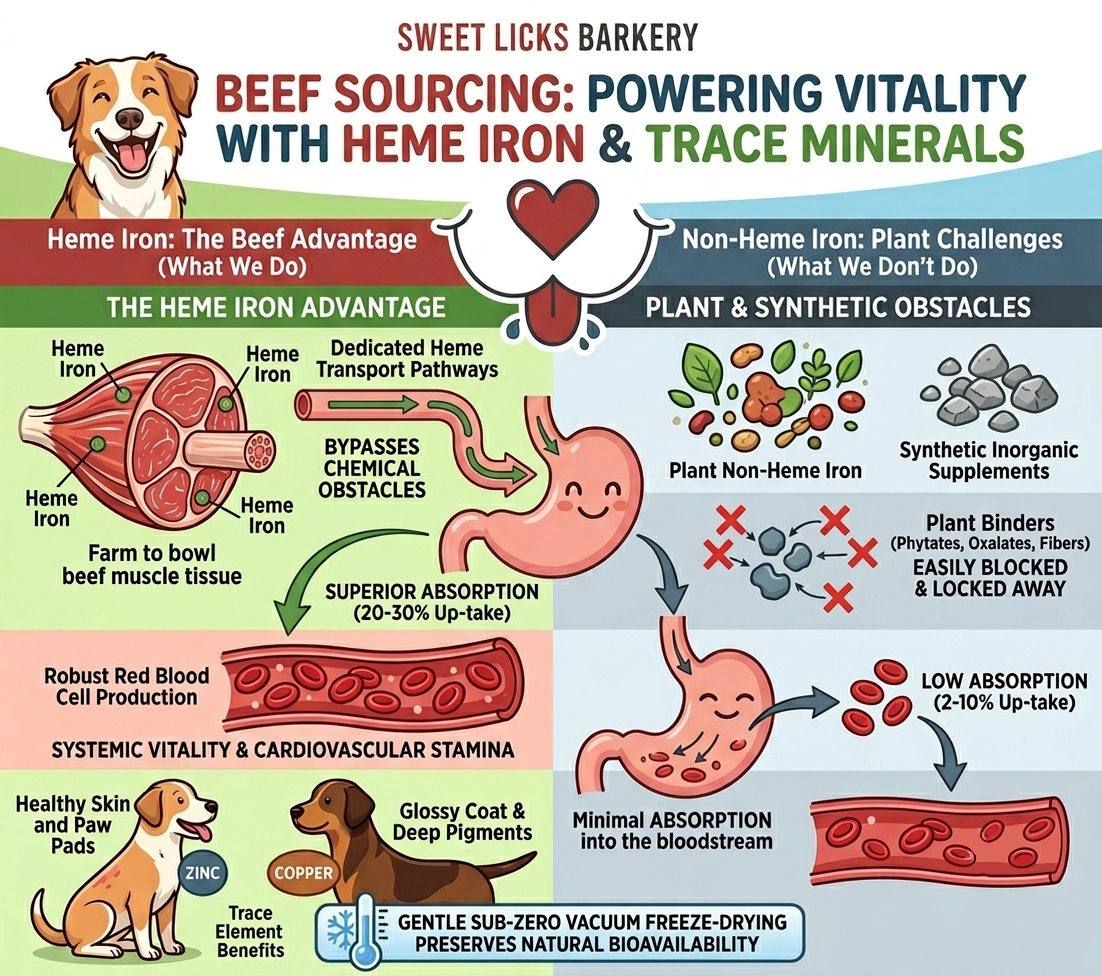
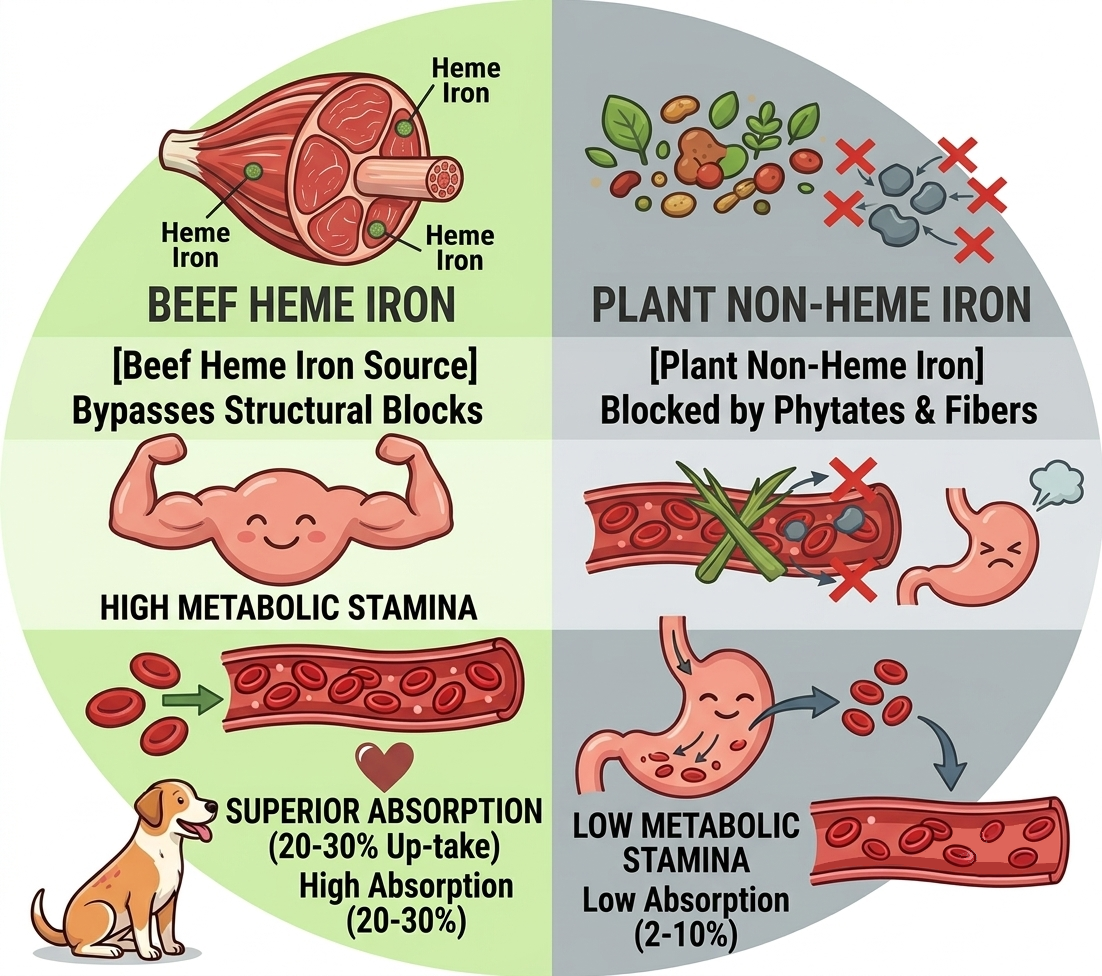
Dietary iron exists in two separate chemical configurations: heme iron (bound securely within animal muscle and hemoglobin grids) and non-heme iron (found in plant fibers and synthetic inorganic supplements) (Fairweather-Tait, 1987). For companion canines and felines, the difference in absorption efficiency is significant:
Absorption Range: Heme Iron (20--30% Up-take) Compared to Non-Heme Iron (2--10% Up-take)
Non-heme plant iron is highly unstable and easily blocked by dietary binding agents like phytates, oxalates, and plant fibers, which lock the mineral away and pass it out unabsorbed in the stool (Fairweather-Tait, 1987). Heme iron, conversely, bypasses these chemical obstacles entirely. It is absorbed through separate, dedicated enterocyte transport pathways that remain unaffected by plant binders (Fairweather-Tait, 1987). This makes farm to bowl beef an exceptional tool for supporting robust red blood cell production and maintaining metabolic stamina in working or active dogs (Case et al., 2011).
Beef Heme Iron vs Plant Heme Iron
Supporting Cellular Defenses and Coat Sheen
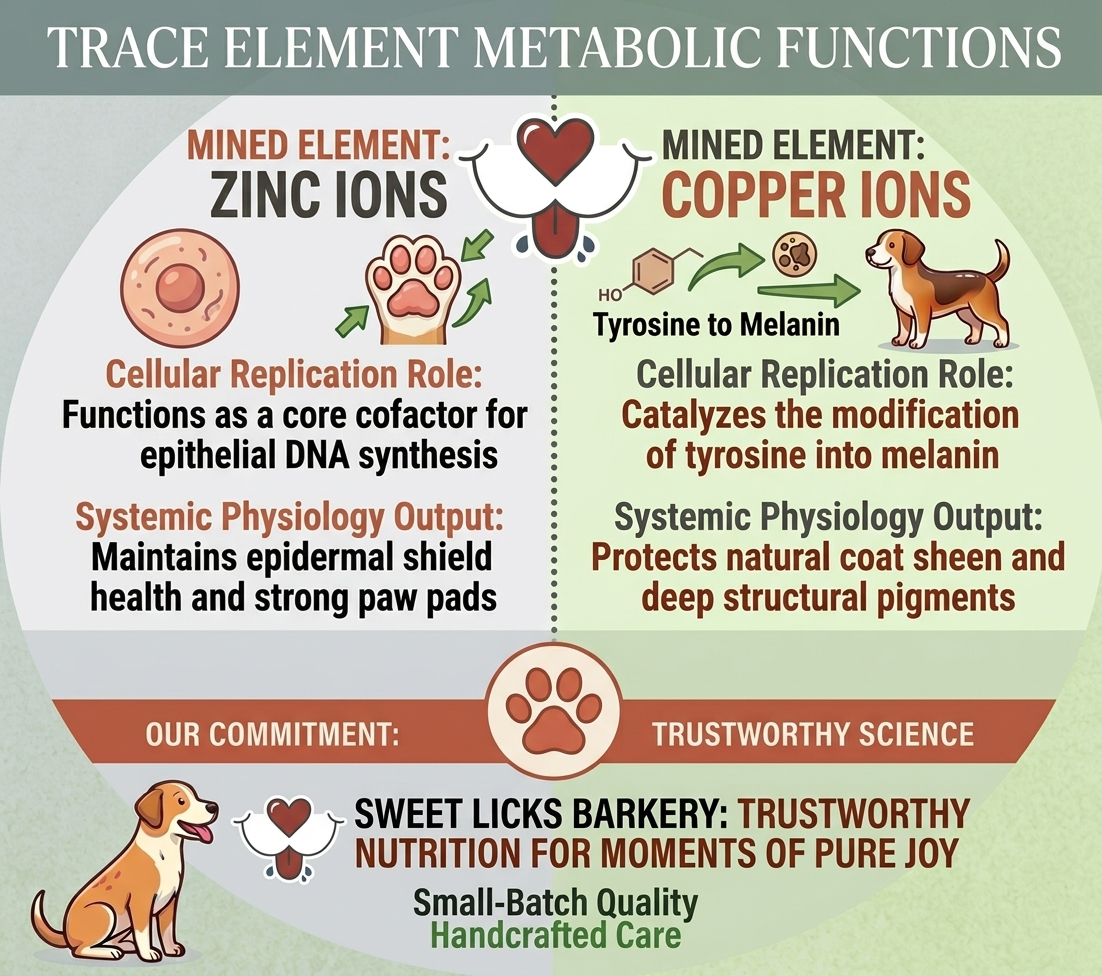
Beyond oxygen transport, un-rendered farm to bowl beef tissue provides an optimal balance of zinc and copper—two trace elements that serve as vital catalysts for systemic repair (National Research Council, 2006).
Beef - Trace Elements
When treats are produced using low-grade rendered meals or high-heat extrusion, these delicate trace minerals frequently bind with added chemical texturizers and stabilizers, forming insoluble compounds that pass through the body completely unabsorbed (Case et al., 2011; Koppel et al., 2014). By freeze-drying our farm to bowl beef tissue gently in a vacuum, we preserve these natural trace minerals in their highly accessible, organic states (Lyons et al., 2009). This careful processing ensures your pet's body receives clean, honest nutrition that supports vibrant skin, a glossy coat, and robust daily health.
References
Case, L. P., Daristotle, L., Hayek, M. G., & Raasch, M. F. (2011). Canine and Feline Nutrition: A Resource for Companion Animal Professionals (3rd ed.). Mosby Elsevier.
Fairweather-Tait, S. J. (1987). The concept of bioavailability as it applies to iron. International Journal for Vitamin and Nutrition Research, 57(4), 431-443.
Koppel, K., Gibson, M., Alavi, S., & Aldrich, G. (2014). The Effects of Cooking Process and Meat Inclusion on Pet Food Flavor and Texture Characteristics. Animals, 4(2), 254-271. https://doi.org/10.3390/ani4020254
Lyons, W. J., Ben-Haim, Y., & Wood, R. (2009). Quality control optimization under severe uncertainty in small-batch food manufacturing. Journal of Food Process Engineering, 32(4), 512-531. https://doi.org/10.1111/j.1745-4530.2007.00229.x
National Research Council (NRC). (2006). Nutrient Requirements of Dogs and Cats. National Academies Press. https://doi.org/10.17226/10668