
Hypoallergenic Sourcing: The Biological Value of Wild Boar
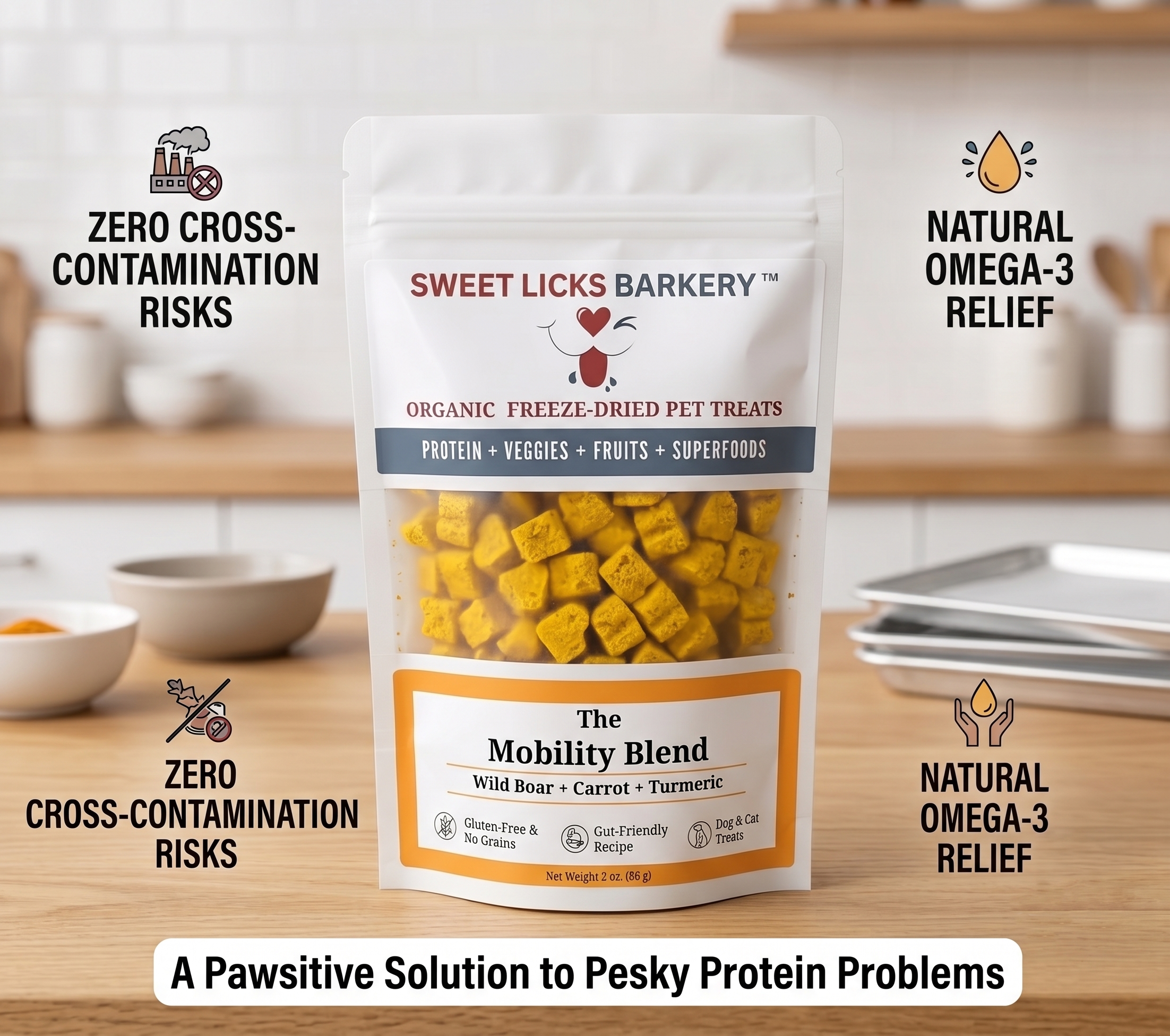
wild boar treats for allergic dogs
Elimination Diet Dynamics: Selecting Novel Sourced Proteins
When a companion animal develops a food hypersensitivity or allergy, their immune system mistakenly identifies common dietary proteins as harmful foreign invaders. This overactive response triggers an inflammatory cascade that often presents as skin issues—such as chronic pruritus, red ears, and constant paw licking—or gastrointestinal distress like loose stools and vomiting (Verlinden et al., 2006). Managing these sensitive patients requires veterinarians and pet parents to utilize a strict elimination diet, removing all previously consumed proteins and replacing them with a single, unadulterated novel protein (Ricci et al., 2013).
While novel proteins like kangaroo or venison are frequently discussed, farm-to-bowl wild boar stands out as an exceptional alternative that delivers outstanding biological value with a highly favorable lipid profile for sensitive dogs.
The Hazard of Factory Cross-Contamination
The primary challenge of navigating an elimination trial with a sensitive pet is the widespread issue of cross-contamination in commercial pet food manufacturing (Ricci et al., 2013). Immunological testing of commercial foods has revealed that over 40% of tested pet items contain hidden, unlisted animal proteins due to shared processing equipment and vague sourcing protocols (Ricci et al., 2013). This accidental exposure can disrupt an entire allergy trial, leaving pet parents guessing about the true cause of their pet's discomfort.
Sweet Licks Barkery eliminates this risk completely through our strict small-batch discipline and clear open labels:
True Novel Protein Selection: Wild boar represents an exceptionally successful novel protein choice for pets raised on standard commercial beef, pork, and poultry recipes. Because it is rarely found in mass-market pet foods, a dog's immune system is highly unlikely to recognize and react to it.
Lean, Anti-Inflammatory Architecture: Unlike domestic pork, wild boar is naturally leaner and features a significantly higher concentration of Omega-3 polyunsaturated fatty acids (PUFAs). This highly favorable Omega-6 to Omega-3 ratio acts as a natural anti-inflammatory, supporting tissue repair without triggering overactive cutaneous allergies.
Zero Shared Sourcing Equipment: Every batch run is handled independently in a thoroughly sanitized environment, ensuring our single-protein recipes remain entirely free from hidden cross-contaminants (Lyons et al., 2009).
[Mass Retail Production] -> Shared Assembly Lines -> Cross-Contamination Triggers Allergies
[Sweet Licks Small Batch] -> Isolated Sourcing -> True Single-Protein Allergen Safety
Fueling the Elimination Trial Safely
Analytically, wild boar muscle tissue matches or exceeds the amino acid density of traditional meats while remaining low in fat, supplying all the essential nutrients and trace minerals (like Zinc and Iron) needed for healthy cell maintenance and coat repair.
By freeze-drying this clean meat without the use of chemical binders or industrial thickening gums, we deliver a highly digestible reward that supports your pet's elimination trial perfectly, keeping their skin comfortable and their digestion stable (Case et al., 2011).
References
Case, L. P., Daristotle, L., Hayek, M. G., & Raasch, M. F. (2011). Canine and Feline Nutrition: A Resource for Companion Animal Professionals (3rd ed.). Mosby Elsevier.
Ciobanu, M. M., et al. (2024). Does hunted wild boar meat meet modern consumer nutritional expectations? Animal Bioscience, 37(4), 717-727.
Lyons, W. J., Ben-Haim, Y., & Wood, R. (2009). Quality control optimization under severe uncertainty in small-batch food manufacturing. Journal of Food Process Engineering, 32(4), 512-531.
Ricci, R., Granato, A., Vascellari, M., Boscarato, M., Palagiano, C., Andrighetto, I., Diez, M., & Mutinelli, F. (2013). Identification of undeclared sources of animal origin in canine dry foods used in dietary elimination trials. Journal of Animal Physiology and Animal Nutrition, 97(s1), 32-38.
Verlinden, A., Hesta, M., Millet, S., & Janssens, G. P. J. (2006). Food allergy in dogs and cats: A review. Critical Reviews in Food Science and Nutrition, 46(3), 259-273.