
Ingredient Intelligence: Debunking the Binders
Intestinal Tight Junction Disruption: How Gluten Triggers Dermatoses
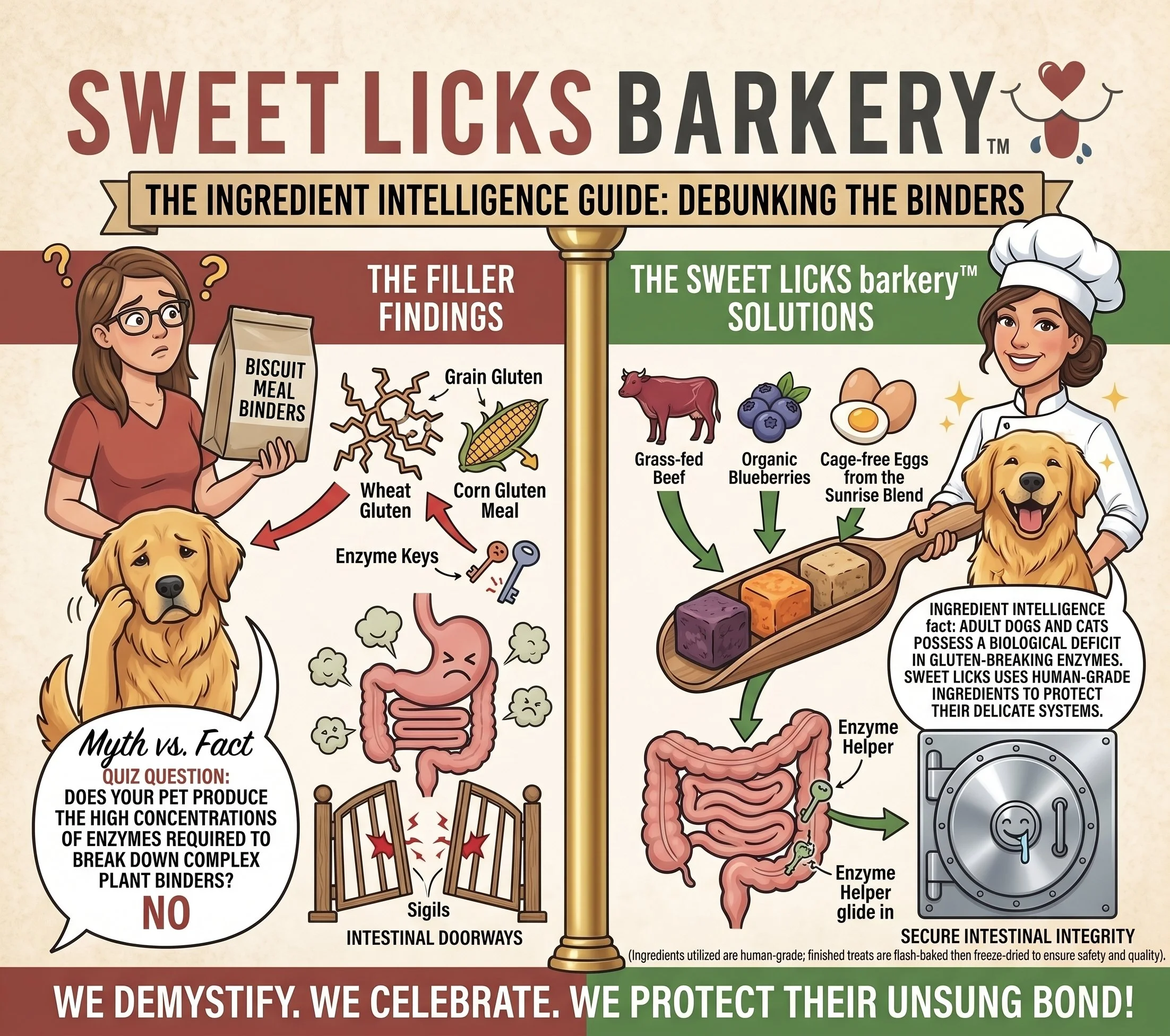
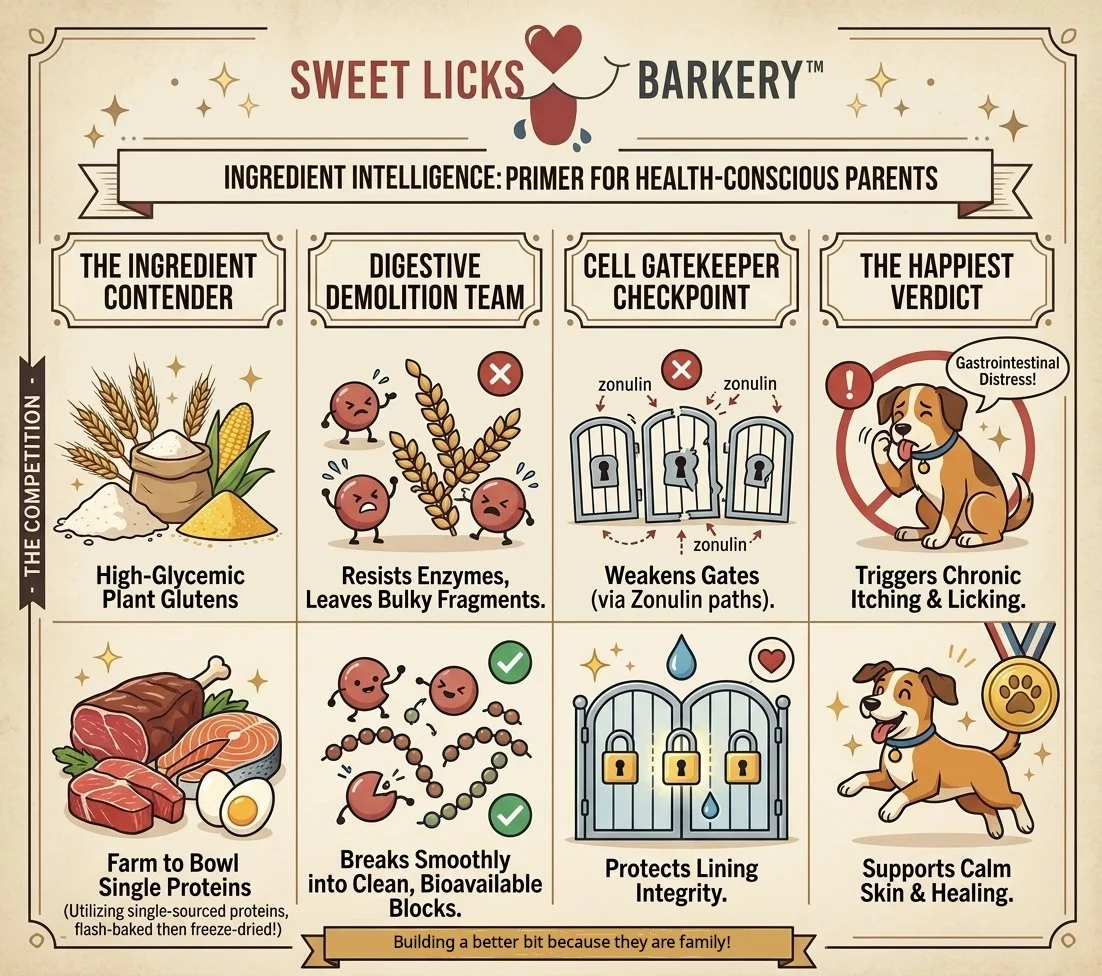
When a pet experiences chronic skin scratching, raw paw pads, or recurring ear infections, the standard response is often to blame the primary meat source. However, veterinary immunology and gastroenterology reveal a hidden culprit behind these issues: the widespread use of high-glycemic plant binders and complex grain glutens in commercial treats (Verlinden et al., 2006). Mass-market dog biscuits and soft treats rely on wheat gluten, corn gluten meal, and white flours to bind ingredients together and maintain structural shape through high-speed factory machinery (Koppel et al., 2014).
A look at your pet's digestive anatomy shows how these cheap plant proteins can directly compromise the intestinal lining, triggering systemic inflammation and chronic allergy symptoms (Case et al., 2011).
The Cellular Impact of Plant Glutens
Unlike herbivores, dogs and cats possess a relatively short, smooth intestinal tract designed for the rapid digestion and absorption of animal proteins and fats (Case et al., 2011). Their digestive systems do not produce high concentrations of the specific enzymes required to cleanly break down complex plant proteins like gluten (National Research Council, 2006).
When a sensitive companion animal ingests treats packed with grain binders, these large, undigested plant protein fragments enter the small intestine, directly irritating the delicate mucosal villi (Verlinden et al., 2006). This chronic irritation can stimulate an undesirable release of zonulin—a microscopic signaling protein that controls the cell-to-cell doorways along the intestinal wall.
Undigested Plant Glutens ---> Chronic Villi Irritation ---> Excessive Zonulin Release ---> Weakened Intestinal Doors (Leaky Gut)
Understanding the Intestinal Doorways
Excessive zonulin release weakens these tight cell-to-cell connections, creating a condition known as increased intestinal permeability or "leaky gut" (Verlinden et al., 2006). With these structural doorways left wide open, undigested food particles, bacterial toxins, and protein fragments escape the digestive tract and enter the bloodstream directly (Verlinden et al., 2006).
The body’s immune system flags these circulating fragments as foreign invaders, launching an overactive inflammatory response. This internal defense cascade causes systemic histamines to spike, ultimately showing up externally as red, itchy skin, inflamed ears, and persistent paw licking (Verlinden et al., 2006).
Intestinal Tight Junction Disruption: How Gluten Triggers Dermatoses
Sweet Licks Barkery completely excludes plant glutens, grain flours, and complex starches from our kitchen. By focusing strictly on 100% farm to bowl single proteins and organic superfood fibers, we protect your pet's delicate intestinal doorways—soothing their digestive system and supporting calm, comfortable skin from the inside out (Case et al., 2011).
References
Case, L. P., Daristotle, L., Hayek, M. G., & Raasch, M. F. (2011). Canine and Feline Nutrition: A Resource for Companion Animal Professionals (3rd ed.). Mosby Elsevier.
Koppel, K., Gibson, M., Alavi, S., & Aldrich, G. (2014). The Effects of Cooking Process and Meat Inclusion on Pet Food Flavor and Texture Characteristics. Animals, 4(2), 254-271. https://doi.org/10.3390/ani4020254
National Research Council (NRC). (2006). Nutrient Requirements of Dogs and Cats. National Academies Press. https://doi.org/10.17226/10668
Verlinden, A., Hesta, M., Millet, S., & Janssens, G. P. J. (2006). Food allergy in dogs and cats: A review. Critical Reviews in Food Science and Nutrition, 46(3), 259-273. https://doi.org/10.1080/10408390591001117