
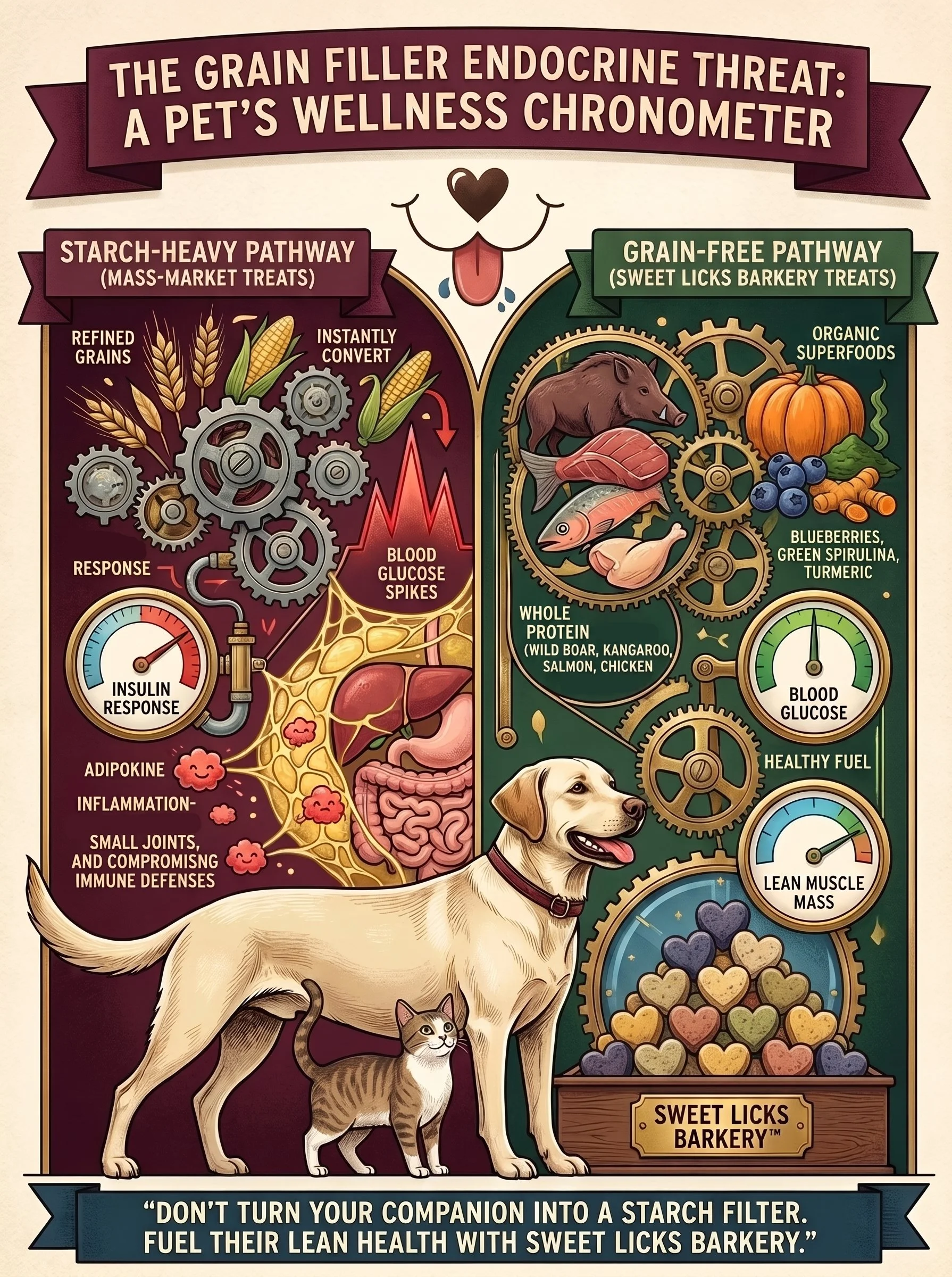
High-Glycemic Binders: How Plant Starches Trigger Insulin Resistance
High-Glycemic Binders: How Plant Starches Trigger Insulin Resistance
The modern companion animal possesses a digestive tract that reflects its ancestral biology. While domestic dogs have adapted to process moderate amounts of starch compared to wild wolves, their internal systems remain optimized to utilize high-quality animal proteins and healthy fats as their primary fields of fuel (Case et al., 2011). Despite this biological blueprint, mass-market pet treats are frequently packed with inexpensive grain fillers—such as refined wheat flour, white rice flour, and ground corn meal—solely to bind ingredients together and lower corporate manufacturing costs (Koppel et al., 2014).
A look at endocrine and metabolic pathways reveals that packing treats with high-glycemic grain fillers exposes your companion to a long-term risk of chronic systemic inflammation (Englyst et al., 1992).
The Glycemic Index Shock Wave
Refined grain flours sit exceptionally high on the glycemic index, meaning they are broken down into simple sugars almost instantly upon entering the small intestine (Englyst et al., 1992). This rapid absorption releases a sudden wave of glucose into the bloodstream, catching the endocrine system off guard:
High-Glycemic Starch Input ——→ leads to ——→ Blood Glucose Rise ——→ leads to increased ——→Acute Pancreatic Insulin Surge
To manage this sudden sugar spike, the pancreas must flood the system with insulin to clear glucose from the blood (Englyst et al., 1992). When a pet is fed grain-heavy snacks multiple times a day, this continuous cycle of spikes and surges can gradually desensitize insulin receptors over time. This hormonal resistance forces the body to route excess sugars straight into fat storage, expanding visceral adipose tissue across vital internal organs.
The Endocrine Threat of Adipose Tissue
Visceral fat is far more than a passive storage site for excess energy; it functions as an active, complex endocrine organ (Case et al., 2011). As adipose tissue expands due to high-carbohydrate diets, it continuously releases inflammatory signaling proteins called adipokines into the bloodstream. This ongoing release places the entire body in a state of chronic, low-grade systemic inflammation that can gradually damage joints and compromise immune defenses over time.
Sweet Licks completely rejects grain binders, crafting our treats from 100% grain-free farm to bowl proteins and organic superfoods to keep blood sugar stable and support lean, long-term health safely.
References
Case, L. P., Daristotle, L., Hayek, M. G., & Raasch, M. F. (2011). Canine and Feline Nutrition: A Resource for Companion Animal Professionals (3rd ed.). Mosby Elsevier.
Englyst, H. N., Kingman, S. M., & Cummings, J. H. (1992). Classification and measurement of nutritionally important starch fractions. European Journal of Clinical Nutrition, 46(s2), S33-S50.
Koppel, K., Gibson, M., Alavi, S., & Aldrich, G. (2014). The Effects of Cooking Process and Meat Inclusion on Pet Food Flavor and Texture Characteristics. Animals, 4(2), 254-271. https://doi.org/10.3390/ani4020254